Frequently Asked Questions
What does Reward-Based Balanced
Training mean?
Reward based balanced training strives to be as force-free as possible, building a valuable relationship between the dog and family, utilizing punishment sparingly and ethically, and having clear, concise and effective communication between all parties. This means our relationship and training is consenting, with the dog actively and happily engaging with us, and conditioning any training aids properly to be associated with rewards.
Do you use treats while training?
Yes, absolutely! Rewards are an important part of training. When first teaching behaviours and skills we use a lot of edible rewards, generally the dog’s own food or a treat they are familiar with to avoid digestive upset. The treats are gradually weaned off, utilized more for “the big moments” such as recall or high durations/distraction activities.
While most dogs will not need frequent food rewards for basic skills upon returning home, it is encouraged to continue them occasionally or when increasing the challenge for your dog. Think about your job; if you were only ever verbally praised but not ever paid, you would likely lose interest at some point and even become frustrated with your job. Your dog works hard, so make sure to pay them!
How does payment work?
Board+Train programs require a minimum 50% deposit to secure your dates, with payment in full due by the end of the program. Boarding, Daycare, and FIT programs must be paid in full at the time of booking before dates will be confirmed.
Accepted Payments are cash, e-transfer, or Visa/MasterCard.
Payment plans are available, contact us for details!
What is the difference between a Board+Train program and a FIT program?
Board+Train programs are when the dog lives with us in our home while getting jump-start on new skills and beginning the process of behaviour modification, where as the FIT programs are when the trainer meets with the family (typically in the family’s home) and teaches them how to work with their dog from the very beginning, fitting the training into the family’s lifestyle and setting them up with better routines to practice between sessions.
What kinds of tools will be used to help me/my dog during training?
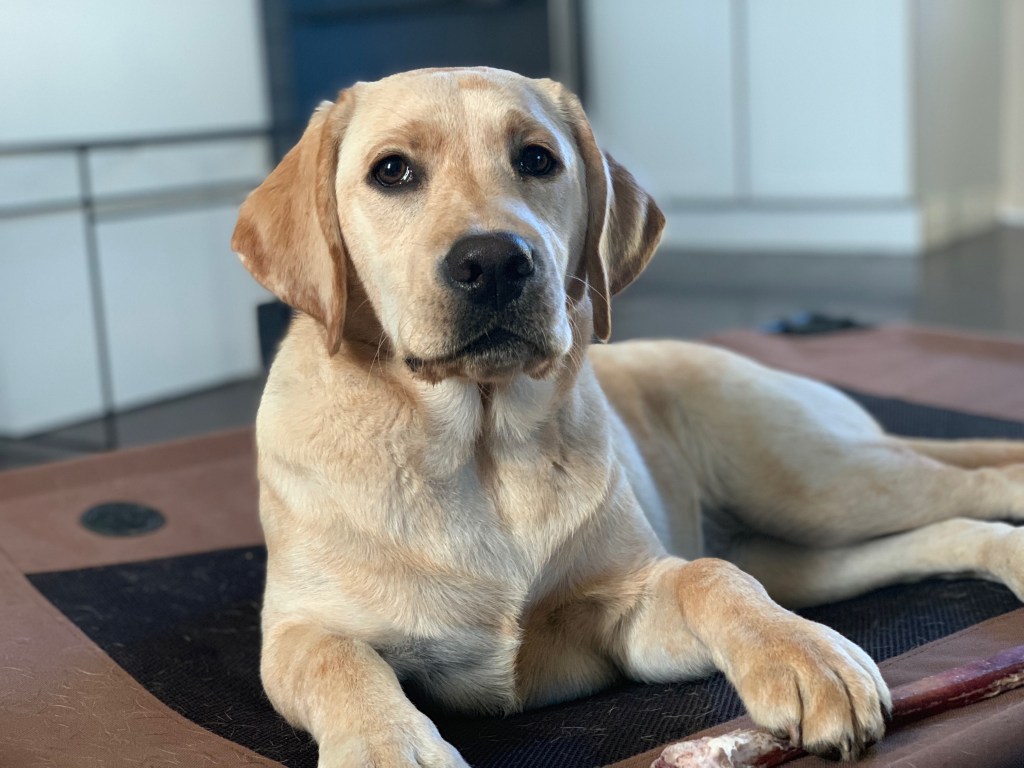
Training tools that are used in our programs and packages may be a flat collar & leash, clicker, martingale collar, slip leash, long line, prong collar, and/or remote collar. Depending on the needs of the dog and family we may use multiple of these, or just one or two. The price of training collars are included in Board+Train program fees, however if your dog requires extra equipment (such as specialty add-ons) there may be an additional cost. This will be discussed with the family during the program!
How long do I need to continue using the tools after training is complete?
That’s a great question, and one that can vary from dog to dog and circumstance to circumstance! Training tools are used to maintain clear and gentle communication with our dogs, and to easily interrupt should they decide something else is more valuable than the command we just gave.
Just because your dog is equipped with a training tool does not mean it needs to be used, it just means you as a responsible pet owner want to be able to clearly and quickly communicate in times of need. Is the goal to not need tools anymore? Yes! However there is nothing wrong with continuing to use them or have training tools ready, just in case you need them.
What do I need to bring for my dog’s Board+Train program?
You will need to bring your dog’s regular food, collar, leash and any training tools you are currently using. You are also welcome to bring treats or chews for your dog to consume while here. I have crates and bedding, as well as plenty of toys, so please leave those at home!
My dog is on raw food, can they still come for a Board+Train program?
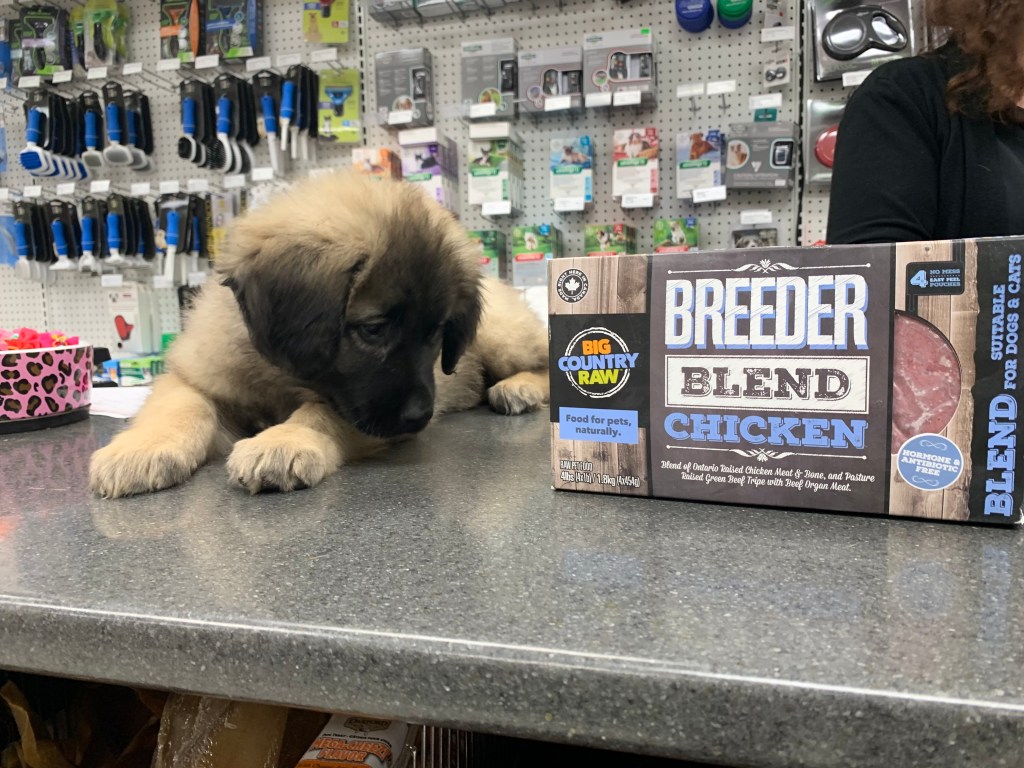
Yes, we have experience feeding many types of meals, including custom raw diets and supplements! Please bring raw or refrigerated food in labelled, leak-proof containers. We are also happy to receive shipments throughout the program, or pick some up locally if needed to conserve space in our freezers.

What does a typical day look like in a Board+Train program?
A typical day for my Board+Train clients starts off with heading outside for a bathroom break around 8am, followed breakfast, and then we move on to training sessions. Dogs then are given social time, either in a group format, or individually with staff, and dogs that require lunch are given that around noon. The afternoon will consist of more sessions or public outings, as well as another social rotation. Dinner is generally around 7pm, followed by another potty time outside. Evening activities include duration work, playtime if the dog is eligible for it, and general relaxation and winding down for the night. Enrichment and various mental stimulation activities will be sprinkled in throughout the day, not necessarily to a specific schedule. Final potty time is around 10pm, and all dogs are crated overnight!
Other than overnight, dogs generally spend no more than a few hours at a time in their crates. All dogs will be crated when unsupervised for their own safety, for the duration of the program. It is mandatory that periodic crating continues once the dog returns home as this is an integral piece of our training programs for rest, decompression, and latent learning. The frequency and duration of rest each dog will require varies, and will be discussed with each family individually based on their dog’s needs.
Once my training program is complete my dog will be perfect, right??

The first thing we need to understand and accept is that training is not a period during the dog’s life, but a complete lifestyle commitment. Training happens all day, every day, and we need to be mindful of WHAT the dog is learning.
Sending your dog for a Board+Train program is like getting a jumpstart on your training lifestyle; someone with experience teaching dogs is setting up the foundation for your dog’s behaviours and expectations. It is up to you (the family) to continue that journey to a new lifestyle, integrating the skills into your daily life, and also enforcing those rules and expectations when your dog makes a mistake or a poor choice. By showing the dog that the rules, structure and accountability also apply in your home – the same as in our home facility – you are creating and maintaining clear communication, and letting your dog relax into a known and comfortable existence. Think of all the possibilities with a dog that knows exactly how to behave, no matter the circumstance or distraction! There are literally endless possibilities.
It’s been a week/month/year and my dog’s behaviour is getting worse again, what do I do?
First, you are not alone! Many clients do have some pushback from their dogs when they return from a training program, not from a lack of training but from an abundance of association. Association is how we remember feeling or acting when confronted with familiarity. For example, you may have been out of school for a long time but if you were told to go sit in the principal’s office you would likely begin to feel sheepish, nervous or even anxious. Likewise, going into an arcade that you used to frequent as a child would bring out giddy excitement and likely a feeling of happy nostalgia. These are both examples of association.
So for your dog who is used to being able to get away with bratty, pushy or even dangerous behaviours with you, but has learned that these behaviours are not acceptable when the trainer is around, it will take you being patient and consistent from the minute it comes home to reinforce that those same behaviours are expected everywhere, with everyone.
If you are having some pushback but feel you are doing everything your trainer instructed, please reach out and we can troubleshoot together! We are always available for our clients to clarify, brainstorm and work together with you to help you and your dog be the best you can be.
New concerns popping up months/years after training? Let’s do a session! While we are happy to help and troubleshoot with any previously worked on concerns, new behaviours may require a different approach. Contact us for more details!
Are we a good fit for each other?
A great question, and one that sadly gets overlooked quite often!
Having a good fit between trainer, family and dog is essential to the success of any program or package. As much as we can help your dog, if our personality or style does not mesh well with the family’s then it creates difficulty in communication, lack of commitment to the training, and an overall sense of dissatisfaction with the finished product! It is not only in your best interest to have a trainer fit you and your needs, but also in mine. Dog training is personal, it is deep, and it is emotionally engaging. This is not only true for owners, but also for the trainers. We want to see you having great, long lasting results, and will do everything in our power to help you on your journey!
Now, that being said, sometimes its just NOT a good fit! And that’s ok! Maybe it isn’t the right time, you don’t feel you can give the commitment that the task requires, or you and the trainer just don’t mesh well. Be honest (but polite!) and just let them know so we aren’t wondering what happened or where you disappeared to. We promise we will not be offended should this happen, it is in the best interest of both parties to move on in this situation. This goes both ways too; if we don’t feel we would be a good fit, we can recommend someone that we feel might be more towards your style, needs, etc.
Above all, be nice to one another!

This all sounds great, when can I start!?
Congratulations on taking the first step to a healthier and more enjoyable relationship with your dog! To set up a free consultation visit our Consultation page (this is required before booking Board+Train programs), or to jump right into booking FIT sessions you can click here!
We look forward to working with you!
 Courteous Canine Inc.